

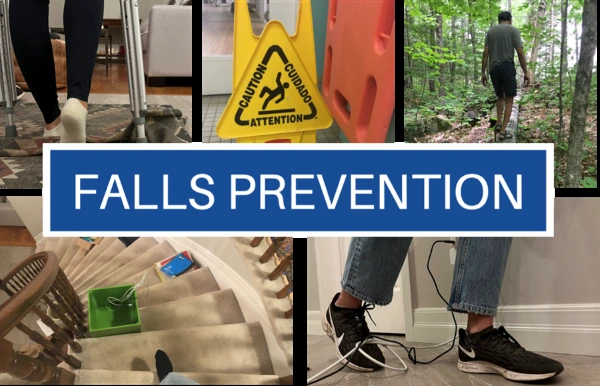
Are you worried about falling? Does the fear of it keep you from doing the things you love?
In Canada, falls are the most common cause of injury in older adults: somewhere between 20 and 30% of adults over 65 fall each year. Those injuries lead, understandably, to anxiety about falling again — and that starts a cycle of less movement, lost strength and worsening balance, which makes walking less safe and the next fall more likely.
What is fear of falling?
Fear of falling is an ongoing concern about falling that ends up limiting what you do day to day. You do not need to have fallen to have it. The fear itself reduces your mobility and strength and limits your function, which puts you at higher risk of a fall later on.
One of the best ways to reduce that risk is to keep active and keep moving. Holding on to your strength and balance as you get older is what lets you carry on independently.
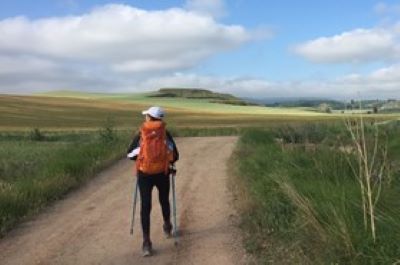
What causes a fall?
Personal factors
- Decreased strength
- Reduced balance
- Changes in vision
- A history of falls
- Cognitive problems
- Lack of sleep
- Impulsivity, or being in a rush
- Depression and anxiety
- Medications — ask your doctor about the side effects
- Alcohol and substance use
Environmental factors
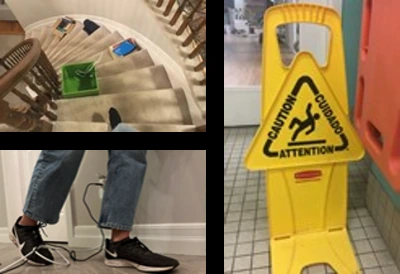
- Stairs
- Throw rugs
- Poor lighting
- Slippery or wet floors
- Inappropriate shoes
- The wrong walking aid
- Clutter
How to reduce your risk
In your home
- Remove throw rugs.
- Cut the clutter, and tuck away wires and electrical cords.
- Use a non-slip mat inside and outside the bath or shower.
- Install grab bars on the shower walls.
- Install a grab bar beside the bed to get in and out safely.
- Light the house properly.
- Sit on the edge of the bed for ten seconds before standing, to let any dizziness pass.
- Avoid socks on hardwood floors and stairs.
- Install handrails on stairways, and never rush up or down.
- Keep the things you use often within easy reach.
Out in the community
- Wear supportive shoes outdoors.
- Keep your eyes open, and take a moment to look around before you set off.
- Use the walking aid you were prescribed — it improves your balance and lets you walk further.
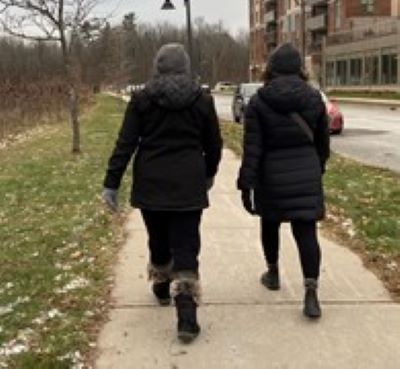
- Walk with a friend.
Exercises to build balance and strength
Sit to stand, five times, progressing to no hands. Marching in place for thirty seconds. Step-ups, ten repetitions. A wide step held for ten seconds. Standing on one leg and tapping the other foot in front, beside and behind, three times per leg.


Please note these exercises are done at your own risk. Hold on to something secure, such as a counter, while you do them.
What happens if you do fall?
In an ideal world nobody would fall at all, but if you live alone and think you are at risk, it is worth having a plan.
- If you are going down, try to land on your buttock — easier said than done. Afterwards, do not rush to get up. Check that you are not injured first.
- If you cannot get up, call for help: reach for your phone, or use a personal alarm. Talk your plan through with a friend, a neighbour or a family member beforehand so they know they may be the one you call.
- If you cannot reach anyone you know, dial 911.
- If you cannot reach a phone at all, call out or bang on the nearest wall or floor.
- Have people check in on you — schedule regular calls or visits.
- Always report a fall to your health care provider, so you can work out the cause and prevent the next one.
Most importantly, do not let the fear of falling stop you living an active life.
Who can help?
A physiotherapist, kinesiologist, athletic therapist or personal trainer can greatly reduce your risk. They will assess your strength, your balance and how you walk, then give you the exercises and the education that bring the risk down.
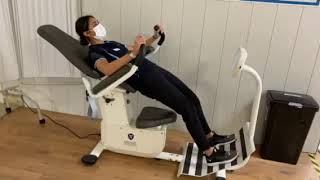
Book with one of our health professionals and get back to feeling like yourself. Call LiquidGym at 613-820-8228.
References
- Young W.R., Williams A.M. (2015). “How fear of falling can increase fall-risk in older adults: applying psychological theory to practical observations.” Gait and Posture, 41(1), 7–12.
- Pearson C., St-Arnaud J., Geran L. (2014). Statistics Canada, “Understanding seniors' risk of falling and their perception of risk.”
- National Institute on Aging (2017). “Prevent falls and fractures.”