
01
Flat or high arches
The plantar fascia supports your arches and absorbs shock with every step. If your arches are not supported, the fascia takes more stress.

Plantar fasciitis is inflammation of the band of tissue, the plantar fascia, that runs from your heel to your toes. The tissue becomes overly tight, causing inflammation and irritation, often towards the inner side of the heel.
If you answered yes to several of those, plantar fasciitis is a likely explanation.
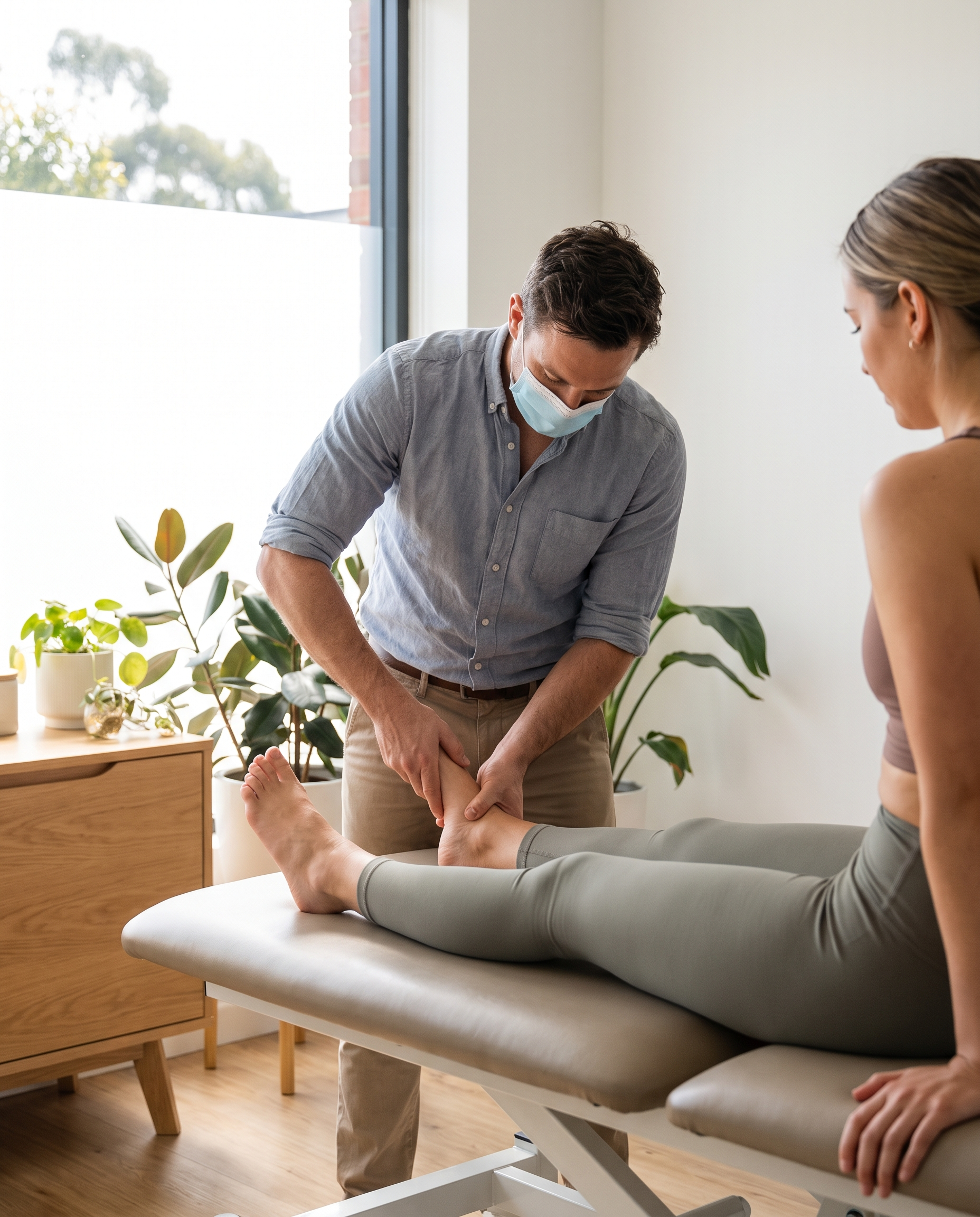
There are several reasons someone develops plantar fasciitis, and they are often related.
The plantar fascia supports your arches and absorbs shock with every step. If your arches are not supported, the fascia takes more stress.
Glute strength affects the position of your foot with each step. If your glutes are not strong enough to externally rotate your hip, the lower leg rotates inwards, the arch collapses or flattens, and more stress lands on the plantar fascia.
Tightness in the gastrocnemius and soleus, and in the Achilles tendon, applies higher stress to the plantar fascia. This is often overused combined with a lack of recovery, stretching, and rest.
The smaller intrinsic muscles of the foot help stabilise your arches. When they are weak, the arches struggle to support and absorb load, which increases tension on the plantar fascia.
A daily practice of stretching your calves and plantar fascia may help decrease symptoms.
Strengthening both areas provides the stability needed to maintain proper alignment and mechanics with activity.
A Strassburg sock is a form of night splint that holds the plantar fascia in a stretched position overnight.
Look for a thicker, well-cushioned midsole and longitudinal arch support that provides motion control. Every foot is different, so try a few styles to find the right fit.
Giving the area proper rest helps decrease inflammation and pain. Adjust daily activities toward sitting where you can.
Additional support in the form of orthotics may be needed if there is a structural or functional weakness in your arches. An assessment will help determine whether orthotics are right for you.
Plantar fasciitis is treated through physiotherapy at LiquidGym. Your therapist assesses why it developed in your case, arches, glutes, calves, foot mechanics, and builds treatment around the cause rather than the symptom alone.
Assessment of the underlying mechanics, hands-on treatment, and a stretching and strengthening programme targeted at what is actually driving the pain.
Explore Physiotherapy →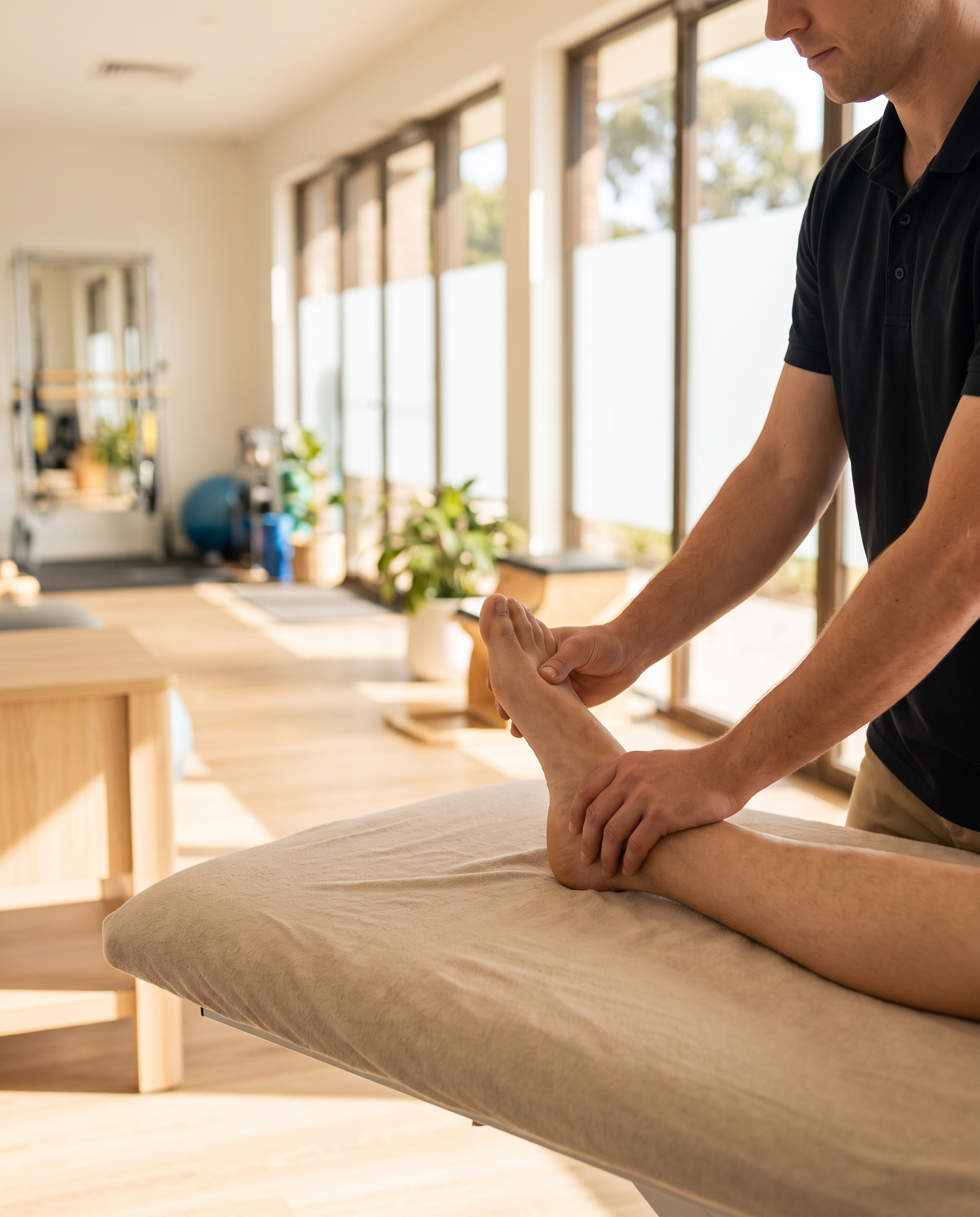
For a thorough analysis of why you have developed plantar fasciitis, or why you have recurring bouts of it, call LiquidGym at 613-820-8228 to book an appointment with one of our therapists.