

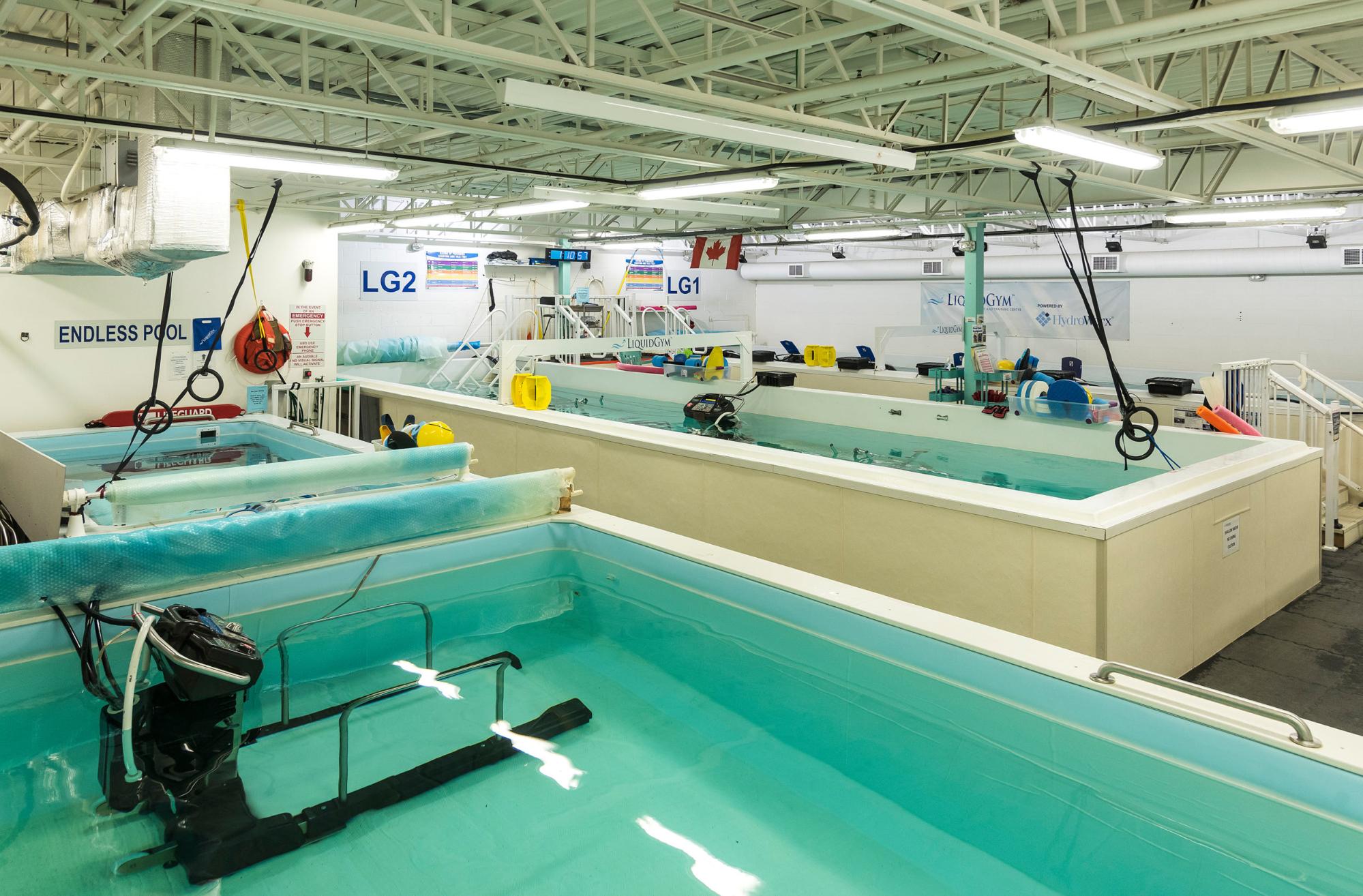
Aquatic therapy is central to rehabilitation here, and it is one of the things that makes us different from other rehab settings. If you have had a session, or are thinking about trying one, you may be wondering why you can do more in the water than on land.
What does water do to the body?
Let us look at the effects water has on the body, and why it is such a useful tool for treating injuries. Some aquatic physics, in other words.
1. Buoyancy
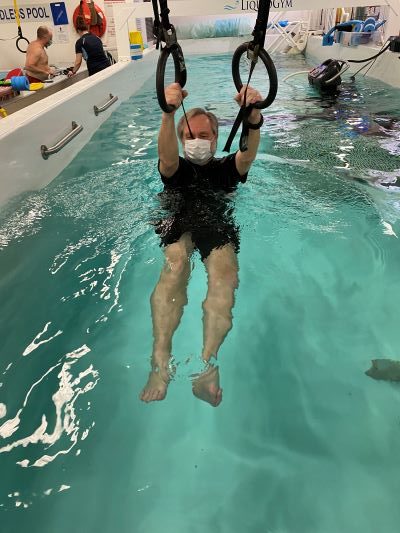
The upward force acting on an object in water. The deeper you go the greater it is, because hydrostatic pressure increases with depth. As you immerse yourself you offload different percentages of your bodyweight:
- Up to your knees — 25% offloaded
- Up to your hips — 50% offloaded
- Up to your shoulders — 85% offloaded
That takes pressure off your joints, partially or completely eliminates gravity, and lets someone with weight-bearing restrictions start training their walking again.
2. Temperature
A typical temperature for relaxing the body sits between 36 and 41 degrees Celsius. Water holds heat better than the body does, so at that temperature heat transfers to you, and your blood vessels open and relax.
Higher water temperature also decreases pain, because pain and temperature travel the same nerve pathways from the skin to the brain. Temperature effectively blocks the pain signal by taking the path for itself.
3. Hydrostatic pressure
The pressure water exerts on an object through the downward effect of gravity, increasing with depth. It moves through your body, helping clear swelling or edema in the limbs, and it strengthens the chest muscles by increasing the work of breathing.
4. Turbulence and drag
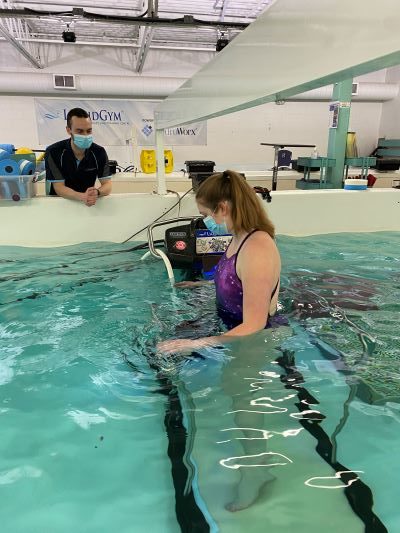
Turbulence is the motion waves create, a matter of changing velocity over time. Drag is the force on a body moving through water, which makes staying upright harder. Water is fourteen times more resistant than air — which makes it excellent for balance and strength training.
FAQ
You mentioned water increasing the work of breathing — should I worry about a therapy pool if I have a cardiac condition? If you do not do regular aerobic exercise it is always wise to be cleared by your family doctor first. Clients with acute cardiac dysfunction, acute restrictive lung dysfunction or uncontrolled restrictive pulmonary disease should be cautious about physical activity in the pool, because of the effect of water on heart and breathing rates.
What other conditions might limit aquatic therapy? Discuss your medical history with your family doctor and your healthcare team. In general these signal that a person is not ready for the pool yet: fever, infection, open wounds or surgical incisions, contagious skin conditions, incontinence, diarrhea or vomiting, uncontrolled seizure disorder, uncontrolled cardiac conditions.
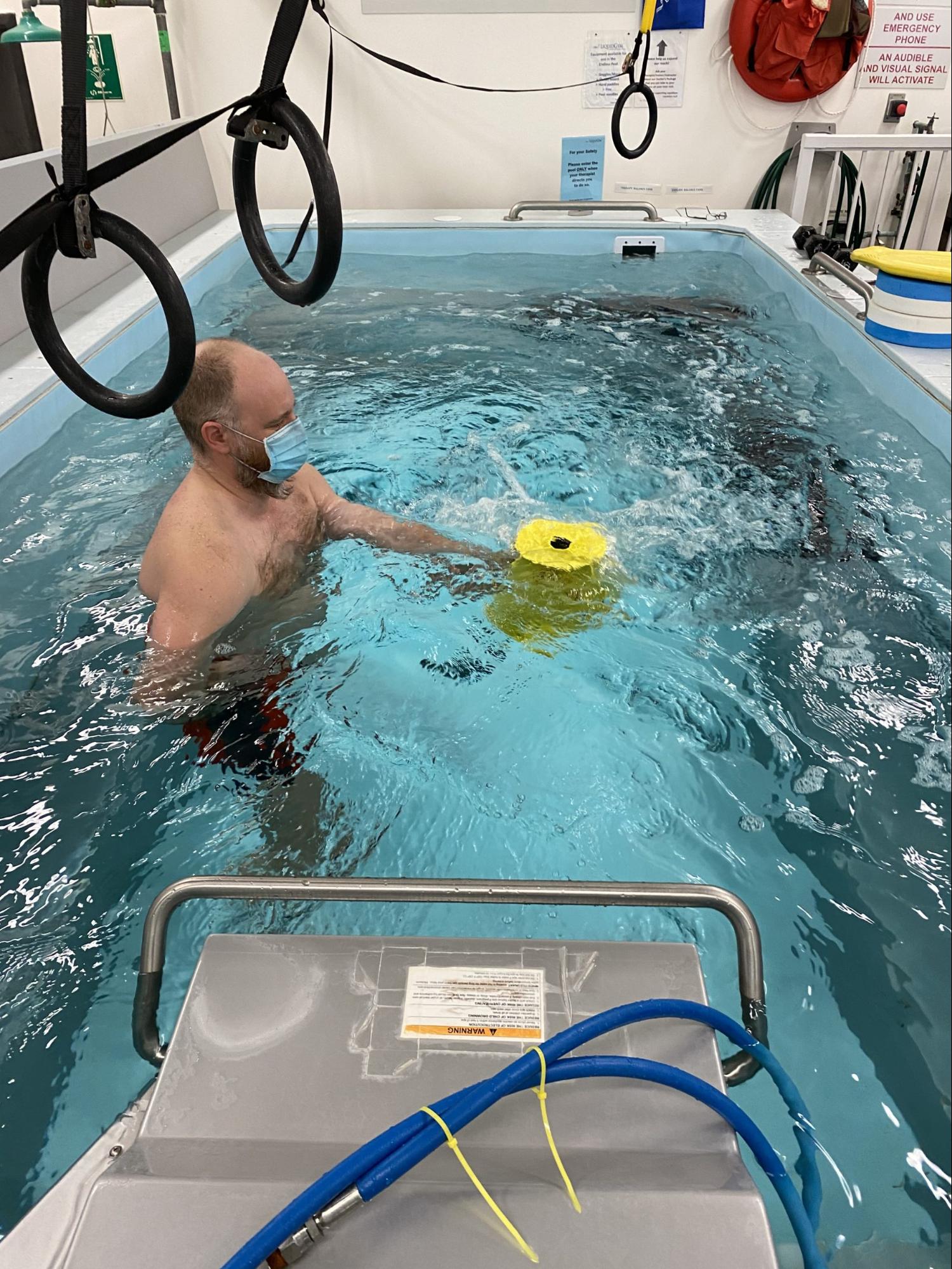
How do I make exercises harder in the water? Three main ways. Surface area — the larger it is, the more resistance, so an open palm rather than a slicing hand. Speed — the faster the movement, the higher the resistance and drag. Depth — less depth means less of your bodyweight offset by buoyancy, which brings you closer to land function.
Curious whether aquatic therapy suits you? Call LiquidGym at 613-820-8228.
References
- Becker, B. & Cole, A. (2010). Comprehensive Aquatic Therapy, 3rd edition. Washington State University Publishing.
- Bonnyman, A. (2016). “Advanced Aquatic Physical Therapy: Evidence Based Practice.” Canadian Aquatic Rehab Institute, presented at LiquidGym, Ottawa.