

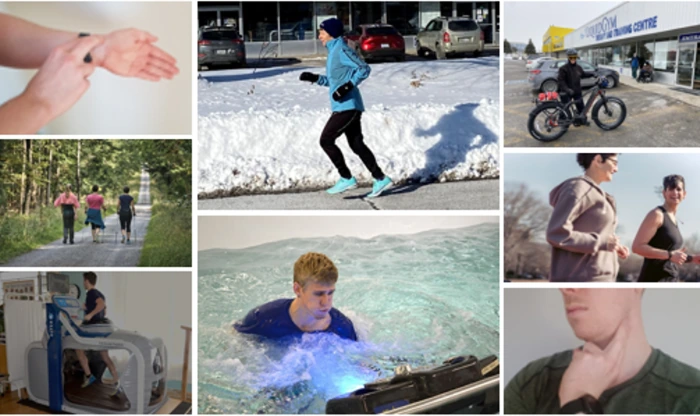
Your shoes are tied, your water bottle is filled, and you are ready to exercise. You are just getting into the pace of things when the question arrives: how hard should I actually be working?
It is not a simple answer, but there are three methods you can use to monitor your own perceived exertion.
What is perceived exertion?
How hard you feel your body is working, based on the physical sensations you experience during exercise.
Why monitor it?
- It keeps you safe, by making sure you are not working too hard.
- It helps you get the most benefit from the exercise.
- It lets you track your progress.
Which sensations should I pay attention to?
Several rather than one. For instance:
- How heavily you are breathing
- How fast your heart is beating
- How tired your muscles feel
- How much you are sweating
1. The talk test
If you can talk while exercising but not sing, you are probably working at moderate intensity. If you can say only a few words at a time without pausing for breath, you are probably working at vigorous intensity.

Tip: exercising with a friend, try to stay in a two-way conversation. If talking becomes either too easy or too difficult, adjust the intensity up or down.
2. The Borg rating of perceived exertion scale
A scale that gives a subjective measure of perceived exertion, running from 6 to 20. Six means no exertion at all; twenty means maximal exertion.
The range runs 6 to 20 because it also estimates your heart rate: take your rating and multiply by ten. So 12 × 10 = 120 beats per minute.
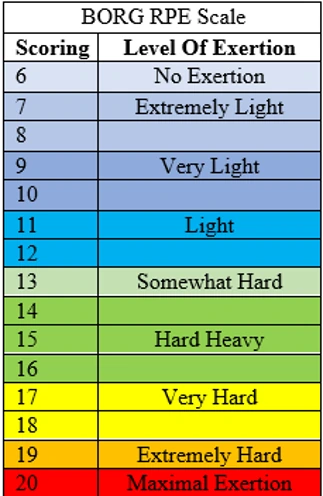
Use the scale to place your exertion the next time you exercise, and keep a record of your scores over time to track progress.
Tip: for moderate intensity, aim for 12 to 14 on the Borg scale. Below or above that range, adjust the intensity accordingly.
3. Monitoring your heart rate
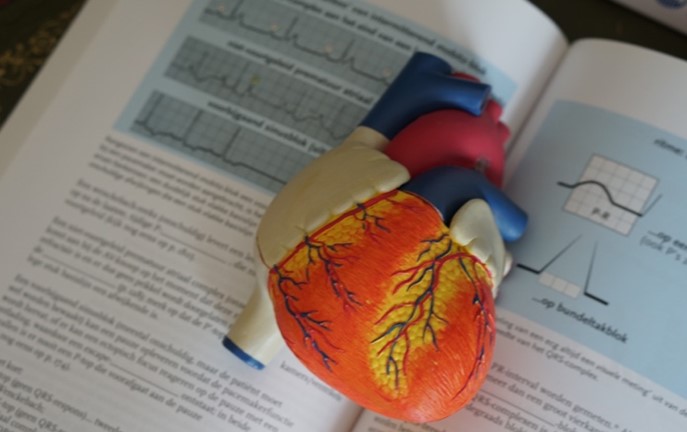
As the intensity of exercise rises, so does your heart rate — your heart has to beat faster to supply more oxygen to the working muscles. That makes heart rate a usable measure of exertion.
If you take medication to manage your blood pressure or heart rate, use the talk test or the Borg scale instead, for more accurate results.
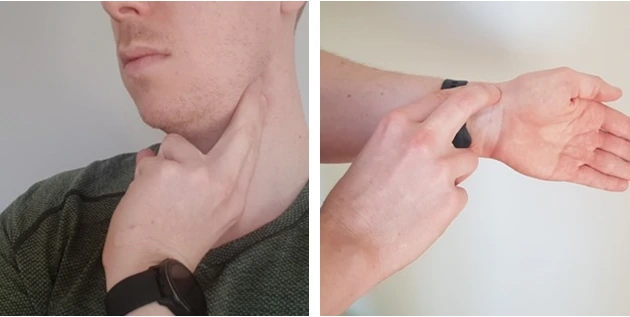
Find your pulse by pressing gently on the radial artery on the outside of the wrist, or the carotid artery on either side of the neck. Use your index and middle fingers together until you feel a light thumping. Count the beats over fifteen seconds and multiply by four: 30 beats × 4 = 120 bpm.
With your heart rate in hand, work out your maximum and target heart rates.
- Maximum heart rate is the highest number of beats your heart can pump under maximum stress: 220 − your age in years.
- Target heart rate is what you are aiming for during exercise: maximum heart rate × your target percentage.
A sixty-year-old would calculate 220 − 60 = 160 bpm. For moderate intensity they would aim for 64 to 76% of that: 160 × 0.64 = 102 bpm, and 160 × 0.76 = 121 bpm. So they would keep their heart rate between 102 and 121 bpm.
Which method is best for me?
All three are worth using, and it is worth experimenting to see which suits you. Keep your preferred one as a tool in the toolbox. Kinesiologists, athletic therapists and physiotherapists can teach you more and help you monitor your exertion.
Want help building a programme at the right intensity for you? Call LiquidGym at 613-820-8228.
References
- Centers for Disease Control and Prevention, “Target Heart Rate & Estimated Maximum Heart Rate.”
- Centers for Disease Control and Prevention, “Perceived Exertion.”
- Centers for Disease Control and Prevention, “Measuring Physical Activity Intensity.”
- American College of Sports Medicine (2010). ACSM's Guidelines for Exercise Testing and Prescription, 8th edition. Lippincott Williams & Wilkins.