

2020 brought many changes. A great many people had to adapt to working from home, and in some cases set up home offices that were less than ideal.
When a workspace is not set up ergonomically, the stress and strain on your joints and muscles goes up — and poor posture makes it worse. Here are the common signs, and some preventative measures that keep your muscles and joints happy.
What is posture?
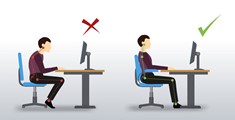
Posture is the position of the limbs, or the carriage of the body as a whole. You want correct or neutral posture, which places minimal stress on muscles, tissues, joints and ligaments. Sitting with poor posture has a number of negative effects, and over time, uncorrected, they lead to chronic pain.
What poor posture does
1. Muscular imbalance
Muscular imbalance usually appears as a combination of tight and weak muscles, in opposing groups on the front and back of the body. It shows up in both the upper and lower body.
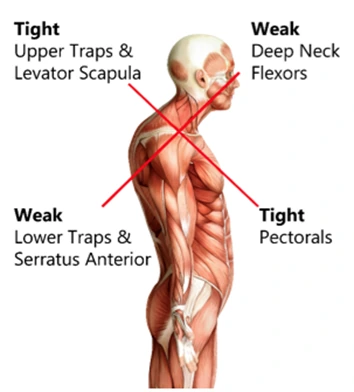
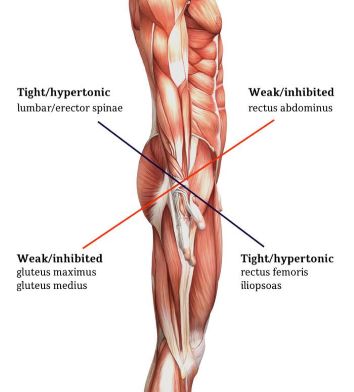
2. Decreased respiratory function
Sit with your head forward and your shoulders rounded, and notice that your chest cannot expand easily as you breathe. Breathing properly requires the chest to expand. Over time this posture limits how far the ribs can expand, pressure in the abdomen rises, and the diaphragm — the major muscle of breathing — struggles to contract and let air fill the lungs.
3. Increased joint wear
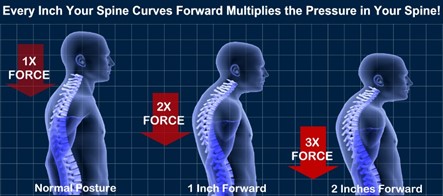
With poor posture the curve of the spine often becomes more pronounced, which increases stress on the joints. Over time that means more wear, and a greater chance of developing osteoarthritis.
4. Decreased circulation
Sitting places less demand on the circulatory system because you are not moving, which lowers heart rate and blood flow to the muscles. Sitting looks passive, but your muscles work hard to hold a fixed position, and insufficient blood flow tires them faster and leaves them more prone to injury.
Preventing it
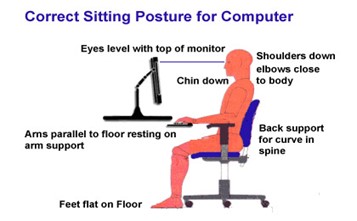
1. A proper workstation
Setting up your workspace ergonomically matters, at home or at the office. Good posture while you work reduces the strain on your body.
2. Take breaks
The Canadian Centre for Occupational Health and Safety recommends a five to ten minute break for every hour you are seated. Standing up and walking around is the ideal way to spend it.
3. Stretching
You can do a series of stretches at your workstation through the day to reduce muscle strain. Hold each for at least thirty seconds, and never stretch into pain or discomfort.
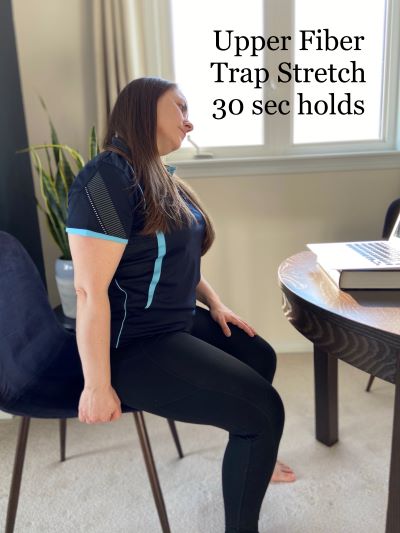
Upper trapezius. The trapezius runs from the base of the skull down the back to the lower chest and out to the shoulder blade; its upper fibres support the weight of the arm. On the side you want to stretch, grasp the bottom of your chair with that hand, then side-bend your head away. You should feel it along the side of your neck. Repeat on the other side.
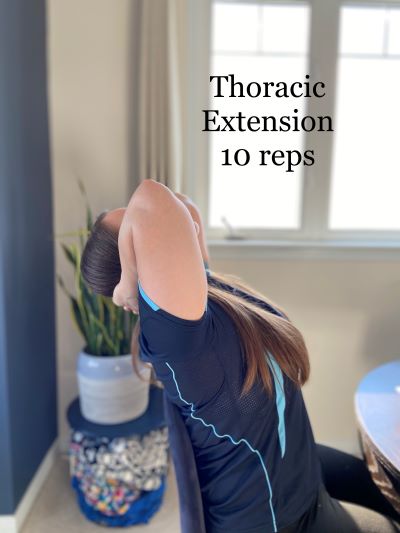
Thoracic extension. Sit with your hips and back against the back of the chair. Clasp your hands behind your head and draw your elbows toward the midline, then arch back over the top of the chair, pointing your elbows at the ceiling. Be careful not to overextend the lower back. Repeat ten times, slowly and under control.
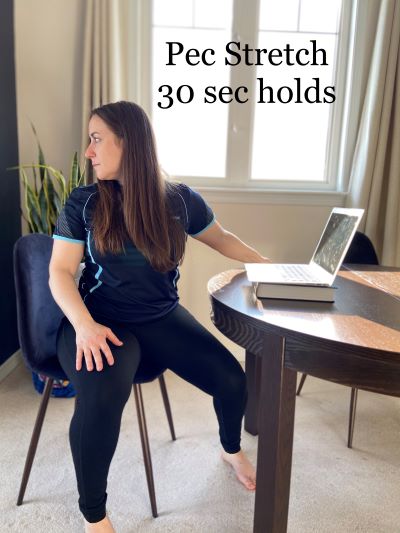
Pectoralis. Hold the edge of your desk with one hand and turn your body away until you feel a gentle stretch across the front of your chest and arm. Change hands and repeat.
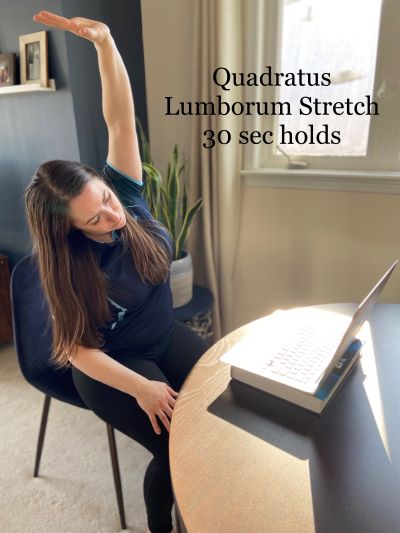
Quadratus lumborum. Sit tall, reach one arm above your head, and side-bend away until you feel a gentle stretch along the side of your torso. Change arms and repeat.
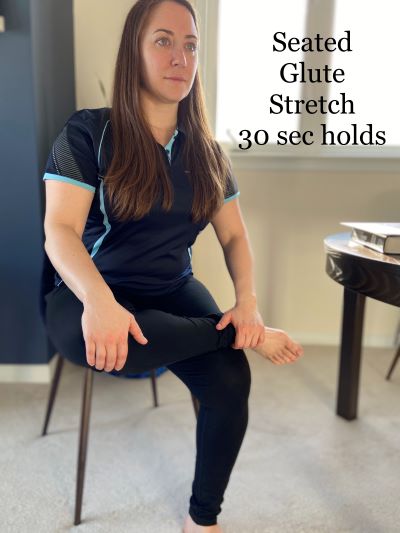
Gluteals. Sit toward the edge of the chair, cross one leg over the other, and keeping a tall posture lean forward until you feel a gentle stretch through the glutes.
4. Strengthening
A few simple exercises while you work improve circulation — sitting compresses it in places — and strengthen the smaller postural muscles.
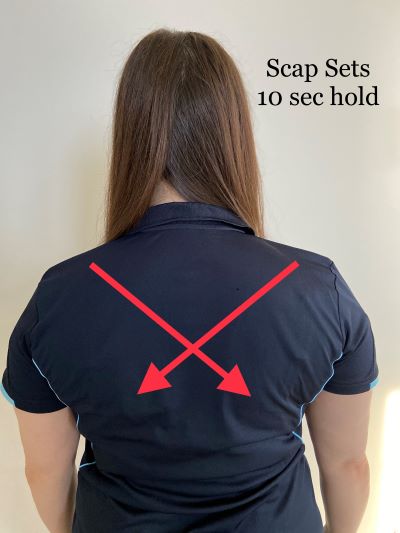
Scapula sets. Sitting tall, draw your shoulder blades together toward the midline, then down toward the opposite back pocket. Avoid tensing the upper trapezius and neck. Hold ten seconds, release, repeat.
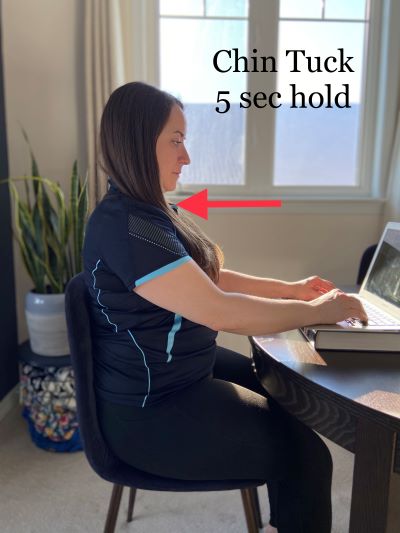
Chin tucks. Sit tall with your shoulders in a scapula-set position. Without flexing your neck forward and down, pull your chin toward the back of your throat, making a double chin. Hold five seconds, release, repeat.
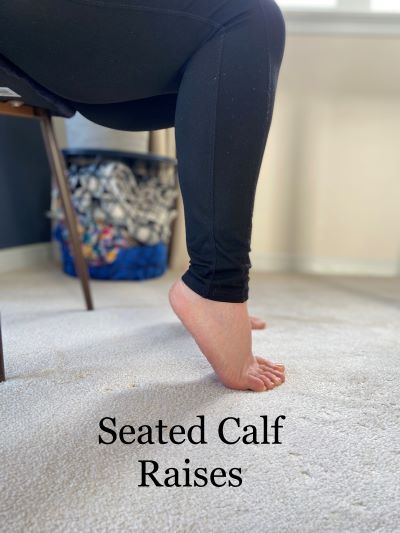
Seated calf raises. Lift your heels off the floor, feel the muscles tighten in your lower leg, then lower and repeat. Easy to do while you work, and good for circulation.
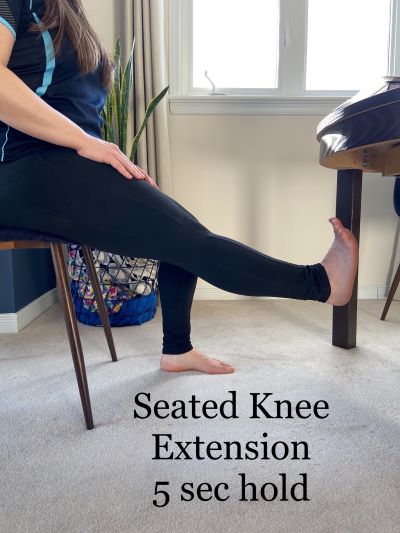
Seated knee extensions. With the chair supporting your back, slowly extend one leg with the ankle flexed and the toes pulled up, straightening the knee as far as you can. Hold five seconds, lower, then repeat with the other leg.
FAQ
Can I change my posture? Yes — by developing greater body awareness, learning more about correct posture, and following a strengthening and stretching programme built around your own strengths and weaknesses.
Do I have to keep my back straight the whole time? No. Trying to hold perfect posture all day is exhausting. Set reminders to do a few exercises and stretches each hour. Over time you will sit taller without thinking about it.
How do I know whether my posture is good or bad? Self-assessment is hard, but watch for a few signs: does your head jut forward past your shoulders when you sit? Do you get low back pain after sitting or standing a long time? Do you have frequent headaches, or tension in your neck? A practitioner can tell you where you stand, and how to correct it.
Working from a setup that is not doing your back any favours? Call LiquidGym at 613-820-8228.
References
- Friend, Erin M. “Poor Posture and its Effects on the Body.” National Spine Health Foundation.
- Zafar H., Abarrati A., Alghadir A.H., Iqbal Z.A. “Effect of different head-neck postures on the respiratory function in healthy males.” BioMed Research International, July 12, 2018.
- Canadian Centre for Occupational Health and Safety, “Working in a sitting position — overview.”