

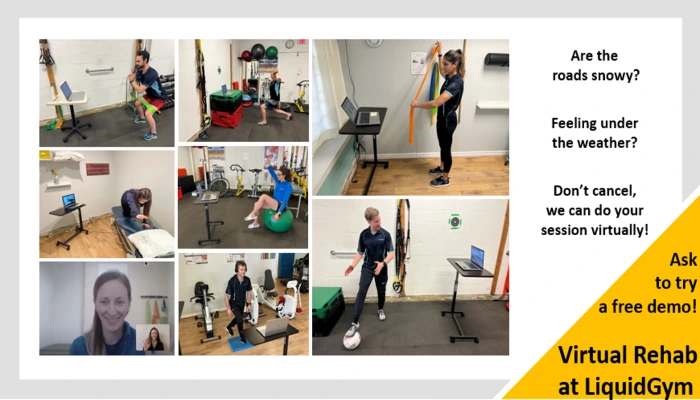
In just a few years the virtual rehab market has been turned upside down. Demand for services to home-bound patients grew, technology took large strides, and delivery protocols were rethought — which turned the old standard into an interactive session for therapist and patient alike.
Virtual sessions go to patients who cannot come into the clinic in person: through illness, a busy work or home schedule, bad weather, living somewhere remote with little access to a professional, or simply wanting the session at home.
Why so many names?
Telerehab, telephysio, virtual physiotherapy, virtual rehab, e-rehabilitation, telerehabilitation, virtual therapy, tele-health — they all describe the same thing.
What is a virtual session?
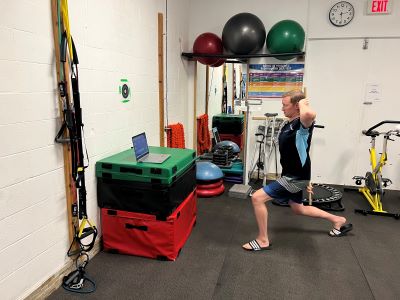
A therapy session delivered over a secure network to your laptop, tablet or smartphone. Click the link your therapist sends you and you are connected.
How does a session run?
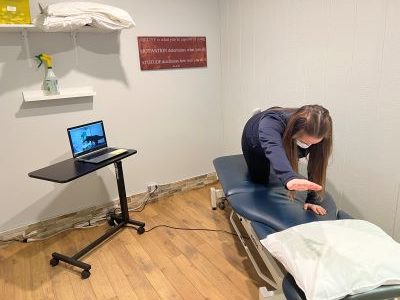
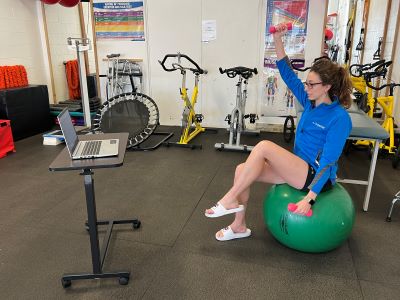
Your therapist walks you through the session, offering treatment options and coaching, watching your movement patterns and correcting them as needed. It is interactive, and much closer to being at LiquidGym than you might expect.
Who is it for?
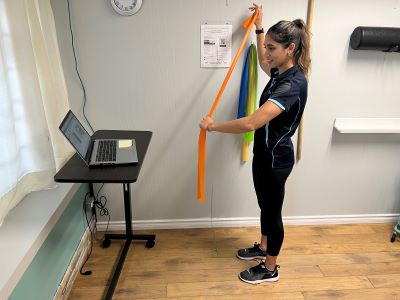
Virtual appointments suit patients who are motivated to learn how to improve their situation and ready to work towards getting better at home. Sessions are delivered by our physiotherapists, kinesiologist and athletic therapist.
Can I have some appointments here and some at home?
Absolutely — whatever is convenient. If the roads are bad, you are feeling under the weather, or the car will not start, just switch the appointment to virtual.
Can my initial assessment be done virtually?
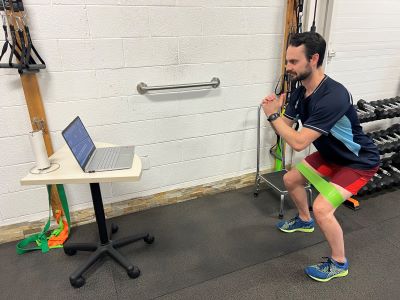
Yes. Everything the therapist needs can be gathered virtually.
What the College of Physiotherapists of Ontario says
Virtual practice is an alternate mode of delivering traditional rehabilitation services, and practising virtual care removes or alters none of the provider's existing responsibilities.
Providers must meet all existing practice requirements: the scope of practice of the profession, the standards of professional practice, the code of ethics, and any provincial and federal law that guides practice. Physiotherapists must be registered to practise in Ontario to provide virtual care to patients in Ontario.
On the barriers to virtual care
Matt Sheldon, Registered Physiotherapist, in a Q&A on the Telus Health website, was asked what the biggest barrier to providing care virtually is:
“The biggest barrier is expectations — both the clinician's and the patient's. Physiotherapy is often thought of as a physical, hands-on treatment, and virtual physiotherapy looks and feels a bit different. But education and exercise are a physiotherapist's most useful treatment tools, and both can be used with great success virtually. As virtual physiotherapy becomes more common, clinicians are becoming more skilled at assessing patients and prescribing exercise therapy over video. Likewise, clients are becoming more aware that virtual physiotherapy is highly effective, either from their own experience or from that of others.”
Want to know more about our virtual rehab, or book a session? Call LiquidGym at 613-820-8228.
You can also read about our virtual physiotherapy service.