

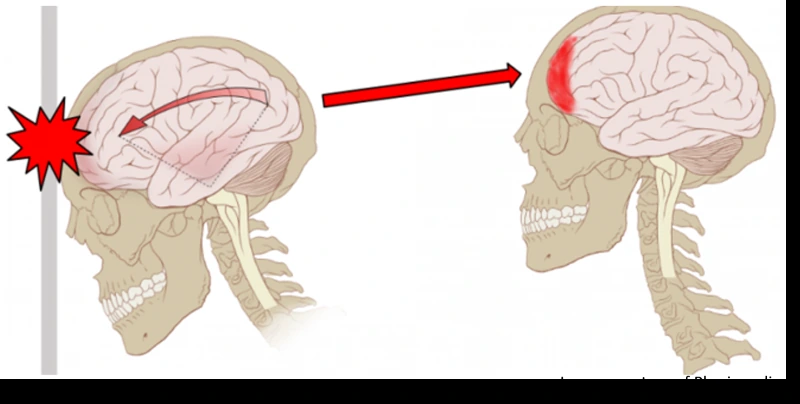
In Canada alone there are 200,000 concussions a year — and that is almost certainly an underestimate. This invisible injury goes under-reported for want of public education and awareness.
So what exactly is a concussion?
A concussion, or mild traumatic brain injury, is a brain injury that causes a disturbance in brain function, usually temporary. It happens when an impact accelerates and decelerates the brain inside the skull. Most people's symptoms resolve within the first one to two weeks. But roughly 15 to 35% of patients have symptoms that persist beyond that, and if they are not managed properly they can cause significant harm.
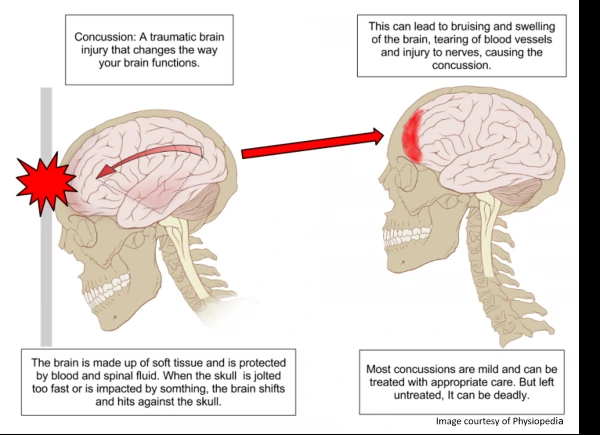
How it presents
No two concussions look the same. Signs and symptoms vary a great deal between patients. Some are obvious, like loss of consciousness; others are subtle, like disturbed sleep. They may appear immediately after the injury, or minutes to hours later.
Signs
- Loss of consciousness
- The fencing response — the arms going into an unnatural position
- The rag-doll sign — lying motionless
- Clutching the head after a blow
- Sudden poor balance
- Vomiting
Symptoms
Physical: headache, neck pain, sensitivity to light or noise, visual problems, dizziness, balance issues, nausea.
Cognitive: memory problems, confusion, feeling in a fog, feeling slowed down.
Emotional: anxiety, nervousness, depression, sadness, irritability, feeling more emotional than usual.
Sleep: fatigue, low energy, sleeping more or less, difficulty falling asleep.
Risk factors for a prolonged recovery
- A history of concussions
- Anxiety or depression
- Family or life stress
- Age — adolescents may take longer
- Sex — females tend to be at higher risk
- Misinformation — resting too long, or returning too soon
- Improper management
If you suspect a concussion
If you have taken a direct or indirect blow to the head and have one or more of the signs or symptoms above, suspect a concussion. Remove yourself from play or work immediately, and do not return until you have been assessed and cleared by a doctor or a practitioner with concussion management training.
The five most effective evidence-based treatments
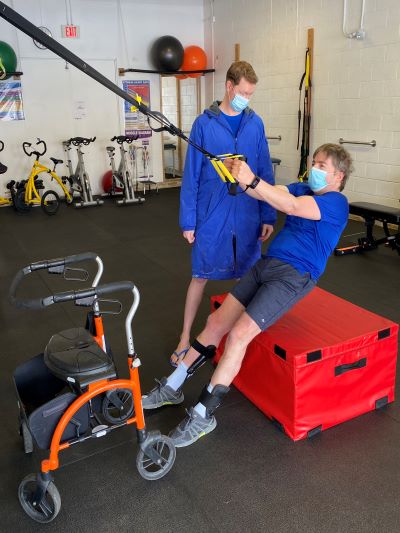
- Exercise therapy
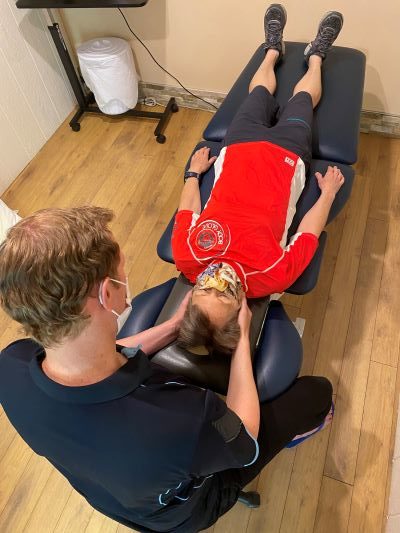
- Manual therapy and neck rehabilitation
- Diet and nutritional changes
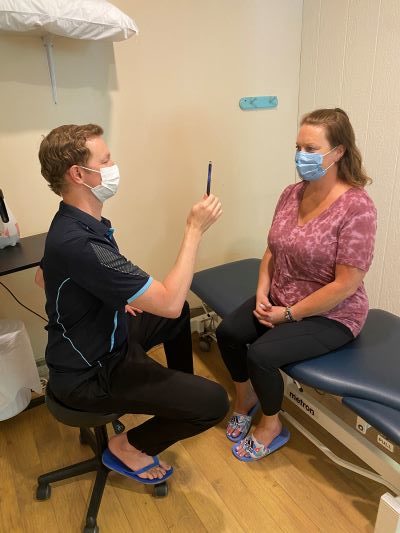
- Vestibular and visual rehabilitation
- Education and reassurance

FAQ
Should I rest for two weeks to see whether the symptoms resolve before seeking therapy? No. Rest used to be the primary initial treatment, but the research has moved on considerably. Prolonged rest after a concussion is now to be avoided, and it is safe to begin therapy with a trained professional within the first 48 hours.
Does there have to be a loss of consciousness? No. That is one of the most common myths. Loss of consciousness is one possible sign, but it does not have to occur.
Will an MRI show a concussion? No. Concussions do not show on a regular x-ray, MRI or CT scan. Your doctor may order them to rule out further damage.
If you have had a blow to the head and something does not feel right, get assessed. Call LiquidGym at 613-820-8228.
References
- Brain Injury Canada, “Statistics on brain injuries.”
- Complete Concussion Management, “Concussion.”
- Physiopedia, “Concussion.”
- SCSC, Evidence, 20 February 2019 (Dr Charles Tator, Director, Canadian Concussion Centre, University Health Network).